IPOR Fusion Alpha Drops | #1

A series of sneak peeks into IPOR Fusion use cases ahead of the official release.
Use case: Transform liquidity fragmentation into superior risk-adjusted returns
Part I: Optimized supply of stablecoins in credit markets
Background
Stablecoin supply to credit markets is one of the most basic and widely used yield-generating activities in DeFi. From DAO Treasuries and passive LPs to idle liquidity pockets of protocols or DeFi native fund managers, every stablecoin portfolio tends to have some kind of yield sleeve that taps into the returns offered in money markets.
Access Part 2 of the Fusion Alpha Drop series focusing on liquidity fragmentation as an arbitrage opportunity.
Transforming liquidity fragmentation into yield opportunity.
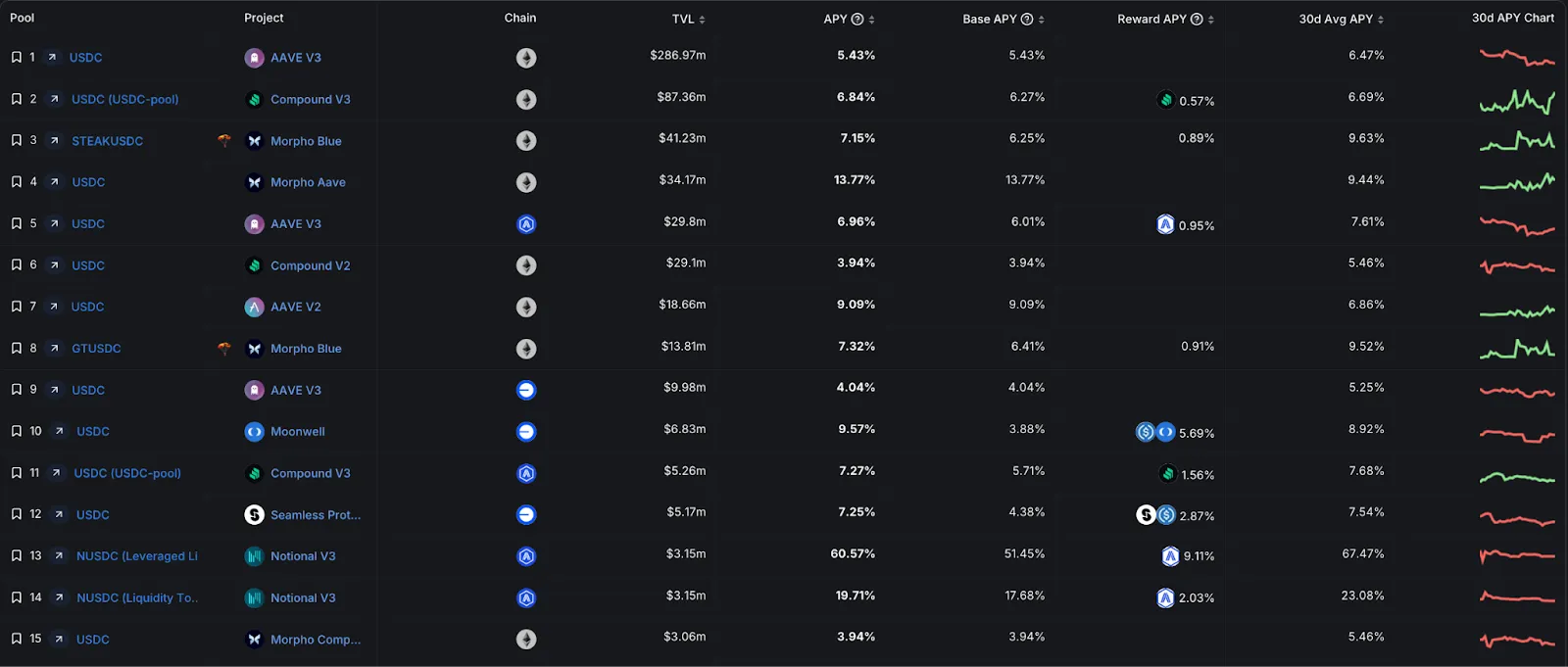
The staggering pace of innovation combined with sticky capital has led to an environment of pronounced liquidity fragmentation in DeFi credit markets. The emergence of money market protocols with novel designs and support for the long tail of assets presents opportunities for higher absolute returns, oftentimes amplified by attractive incentives for liquidity provision (e.g. COMP, MORPH).
‘Slippage’ & gas
A fragmented liquidity landscape is typically also one of more volatile returns. The biggest unknown when allocating capital to an optically higher-yielding market is the sustainability of the return, while the greatest challenge is the market impact of the incremental supply of capital itself.
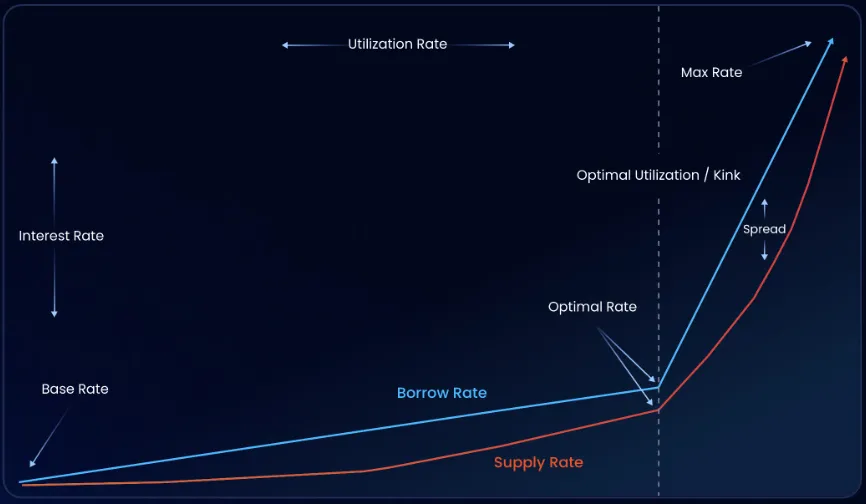
Credit markets are essentially pricing for the utilization of supplied funds; observed rate differentials tend to be suppressed by the rotation of substantial funds between venues. The transfer of sizable capital between two venues can ultimately eliminate optically attractive rate differentials. In extreme cases, allowing for capital to remain -intermittently- uninvested may help produce superior returns.
Gas cost of transactions (at least on Ethereum mainnet) is yet another risk factor with significant impact on net strategy APYs. Gas levels increase with pickup in network activity and exhibit seasonality both at intraday and daily observation frequencies. Deferring the execution of allocation decisions — especially for non-substantial amounts — during periods of punitive gas costs can help achieve significant performance gains overtime.
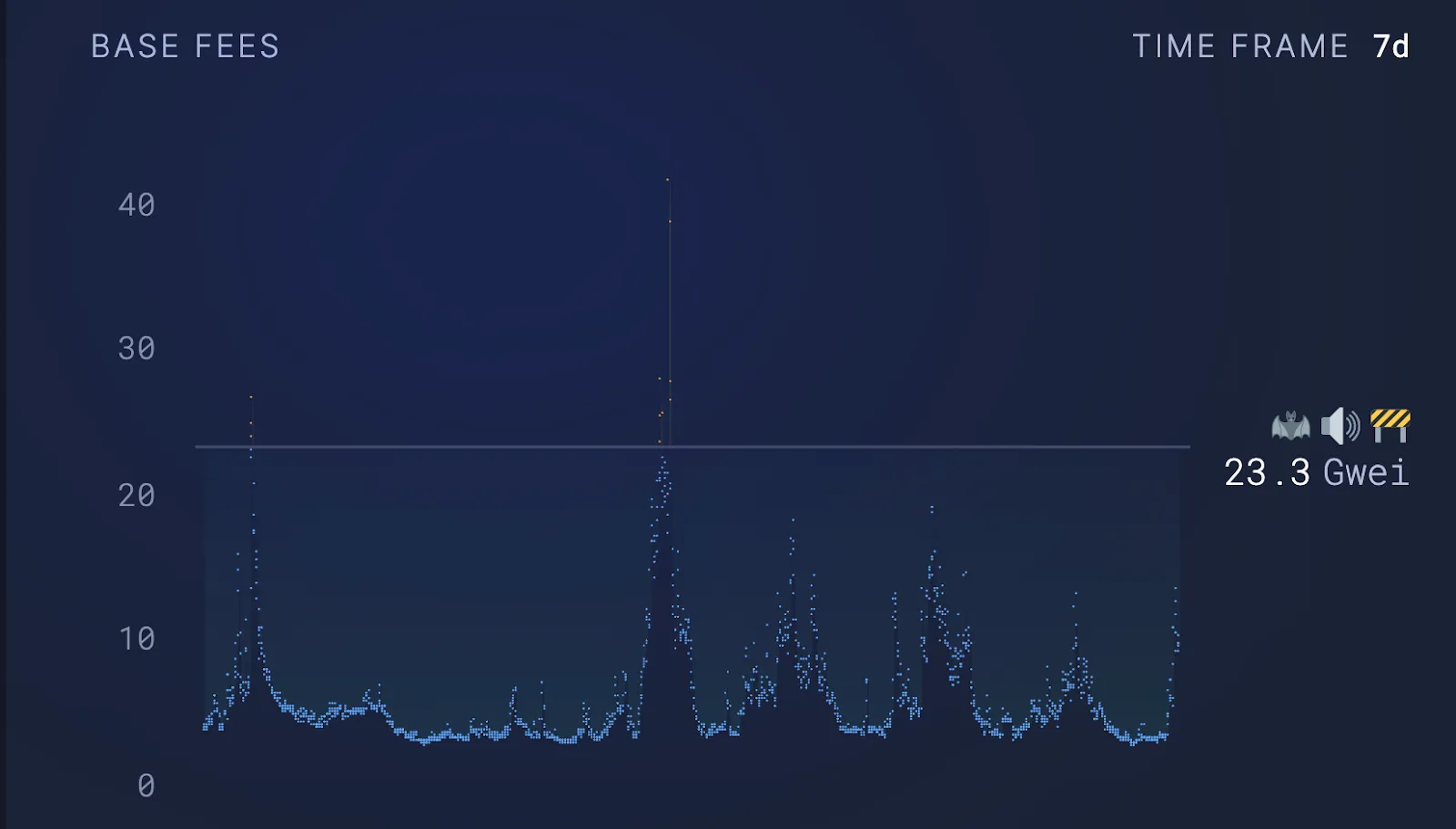
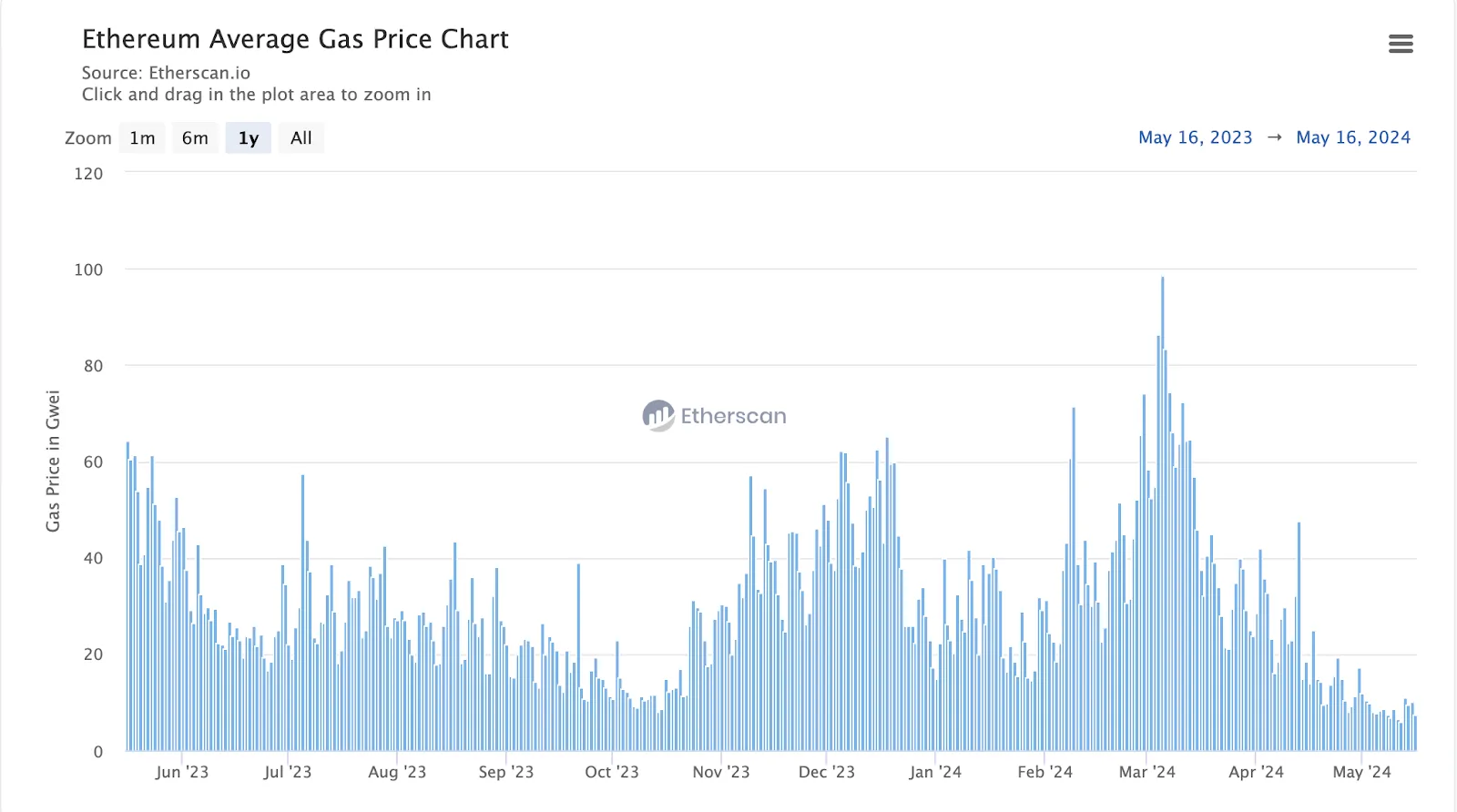
Fragmented liquidity, slippage, rates and gas volatility constitute a perfect case for a more sophisticated, automated and quantitative approach.
Paradoxically, the vast majority of DeFi (power)users are following a manual execution process and entirely discretionary capital allocation approach. Automation is rapidly becoming the word du jour among DeFi strategists.
Risk-adjusted returns & portfolio construction
As DeFi matures, the notion of risk-adjusted returns and diversification is becoming part of the vocabulary of DeFi degens and institutional actors alike. Portfolio construction is becoming a key ingredient of the ‘secret sauce’ of DeFi asset managers. At the end of the day, there is no right or wrong; it is all about risk appetite and preferences. High double-digit returns on a recently launched market might be considered less appealing than consistent single-digit returns in a battle-tested protocol with numerous audits, billions of TVL managed, and several years in deployment.

The definition and assessment of risk is a very broad topic in DeFi. Quantitative risk management techniques from TradFi are not necessarily the right fit. A combination of qualitative and quantitative metrics is close to being considered ‘state of the art’.
Risk monitoring
Even the simplest operation of supplying capital to credit markets is exposed to a broad array of risks, beyond the fluctuation of observed market rates.
“Jump-to-default” risk due to smart contract exploits or economic attacks, as well as extreme volatility due to stablecoin depegs, are two very commonly observed risks that require real-time monitoring and automated response in extreme scenarios. Important governance votes on key “policy” decisions or risk-related parameters, as well as significant protocol upgrades, require monitoring and timely response for the preservation of capital and consistent delivery of attractive returns.
In the remainder of this article, we try to walk a mile in the shoes of a Fusion “Atomist”. We highlight the main steps a creator of a Fusion Vault will have to follow to bring an automated optimal stablecoin supply strategy to life and showcase some of the capabilities that IPOR Fusion creators will be equipped with.

Stablecoin supply to credit markets with Fusion ⚛️
Step 1 — Set up a vault, configure fees, whitelist addresses & choose deployment type
An intuitive user interface will allow a strategy creator (Atomist) to launch a new vault and specify the vault’s base asset (e.g., USDC).

Atomists can also indicate the desirable level of management and performance fees, if applicable to their business model, at this stage. Two deployment options will be available:
🔸 ‘open’ (accessible through the IPOR Fusion dAPP “marketplace”) and
🔸 ‘restricted’
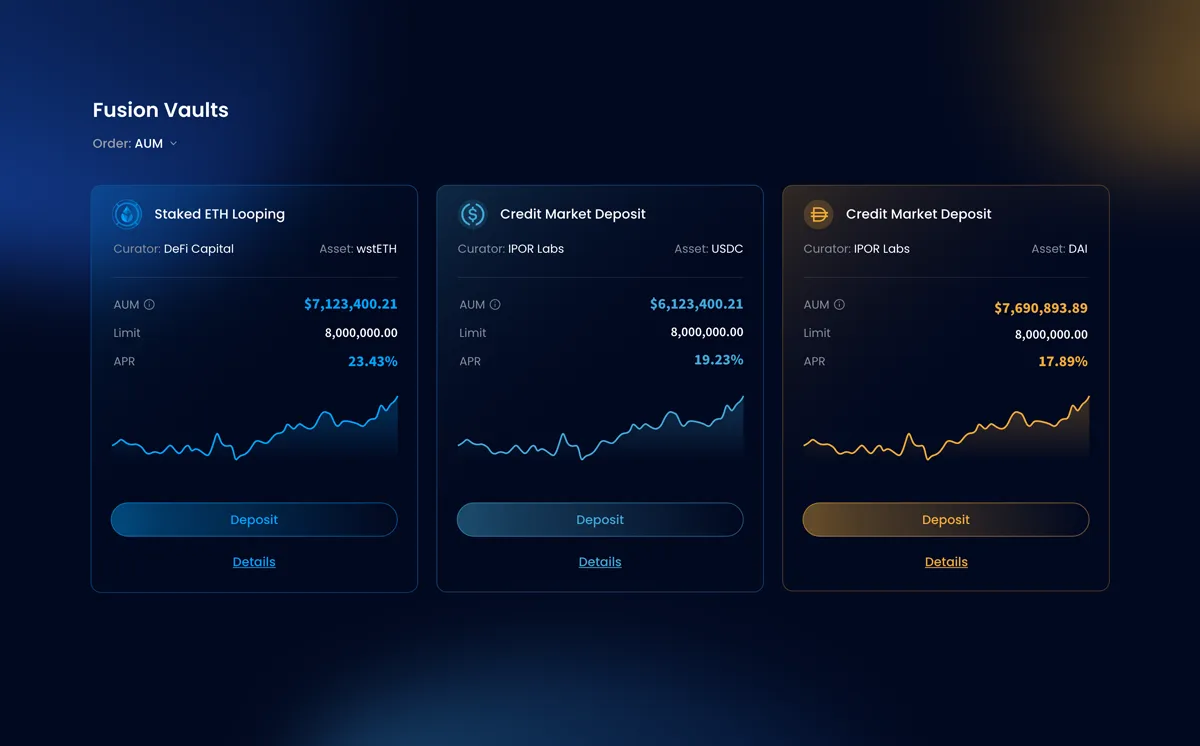
Atomists will also be able to whitelist addresses that are allowed to interact with the vault as suppliers or recipients of funds.
For a complete overview of IPOR Fusion architecture, design considerations and configuration options please refer to the Fusion deep dive:
What is IPOR Fusion? A Technical Overview
Step 2 — Define your investment universe: select your Fuses

As a next step, the Atomist will be able to define the investment universe of the vault strategy, both in terms of assets and protocols (Fuses).
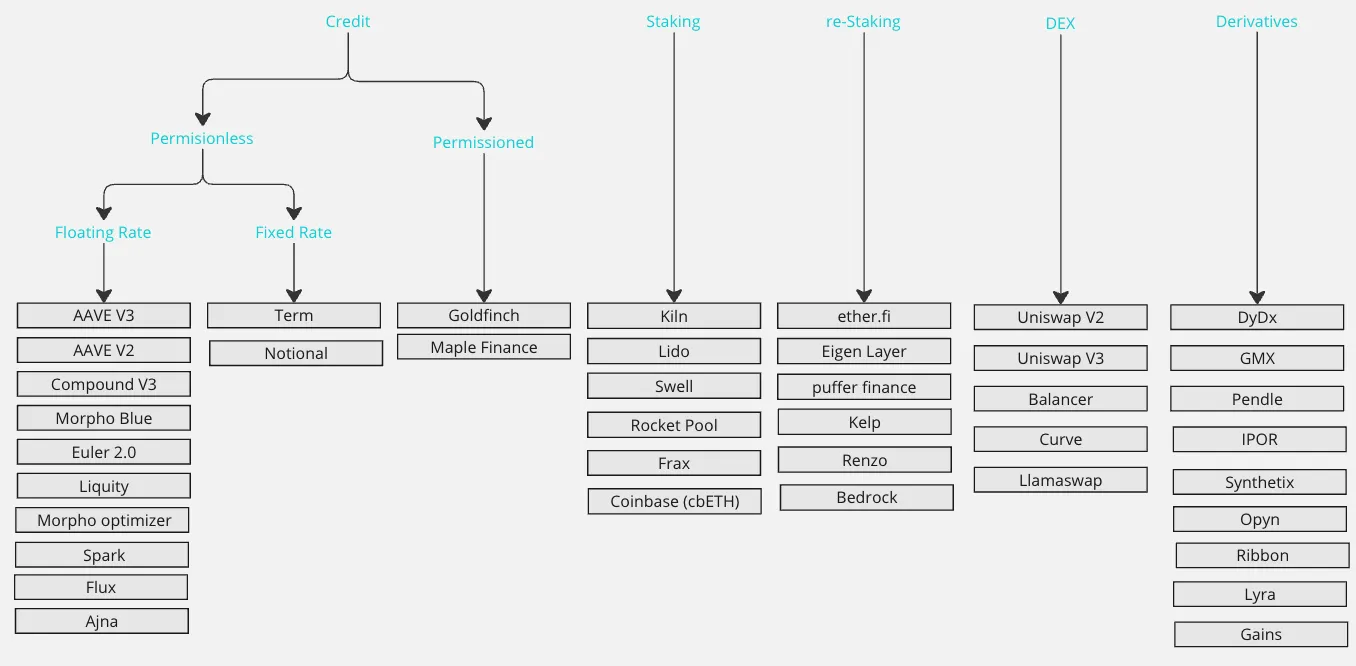
DAO Treasuries, for example, might be only considering Aave (Mainnet and Arbitrum) and Compound v2/v3 on Mainnet as acceptable destinations of their capital, while the manager of a stablecoin fund with a mandate to consistently deliver double-digit returns might be open to expanding further out the risk spectrum, utilizing “Fuses” for the likes of Morpho Blue, Fluid, Ajna and Euler v2.
The eligible assets universe can also be specified in this step. A very strict investment mandate might completely prohibit exposure to any assets other than the vault’s base asset, while other players might be open to take more depeg and currency risk and allow for swaps into a broader list of stablecoins (e.g. USDC, DAI, USDT, LUSD, etc)
Step 3 — Additional smart contract level restrictions
Having selected the investable universe for the vault, the atomist can also apply additional restrictions at the smart contract level. For instance, the vault creator may indicate a cap to the maximum allocation weight of 50% to any credit market.
Step 4 — Apply your secret sauce: optimizations, portfolio construction and risk management
Time to “apply your secret sauce”, connecting your vault to an “Alpha”, an off-chain component implemented in a high-level programming language like Java and Python serving as the “command center” for the vault strategy and feeding it with intelligence and execution logic.
The “Alpha” of the stablecoin supply strategy vault will, for example, be in charge of the following decisions/actions
- Rate levels and credit market state monitoring (market depth, utilization, rate levels)
- Portfolio construction based on trading signals or other indicators, slippage, and gas optimization
- Portfolio rebalancing
- Subscription/redemption management
- Event monitoring (exploits, depegs) and response
- Reward and airdrop management
Example I — Ignore ‘slippage’ at your own peril
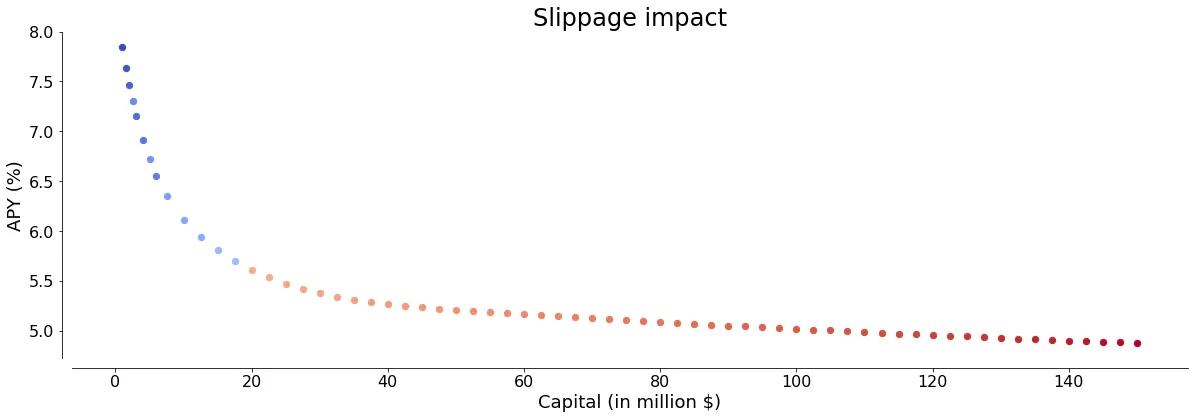
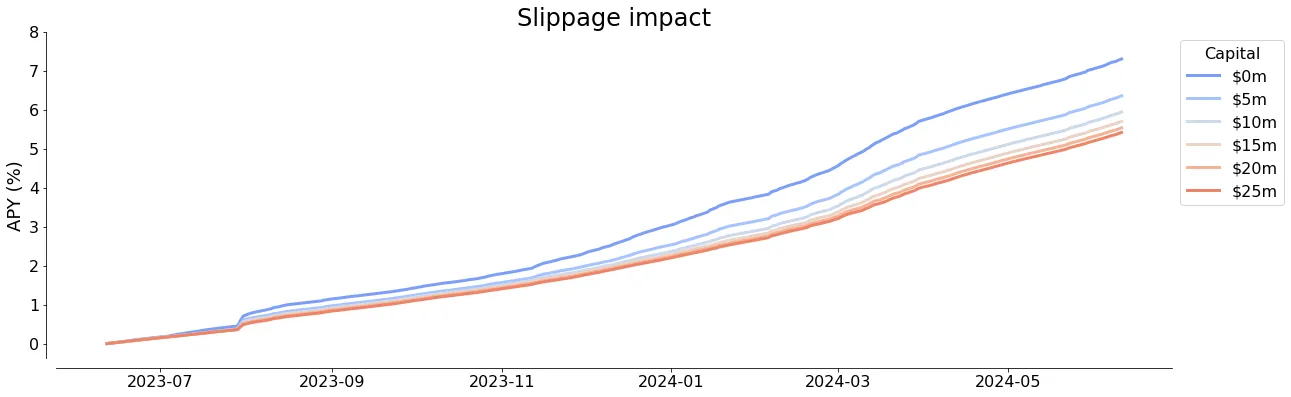
A relatively risk-averse allocator with significant capital (up to $100m) to deploy is exploring the rates offered by established blue chip markets on Ethereum mainnet, using the following Fuses: Aave v2, Aave v3, Compound v2, Compound v3.
For the sake of illustration, we assume that they are able to perfectly predict the highest average weekly rate and rebalance their portfolio every weekend to reduce the impact of gas.
As shown in the results of a backtest simulation below, this allocator would significantly overestimate attainable returns if they ignored slippage.
Incorporating the market impact of supplying different amounts of capital to these credit markets yields completely different results.
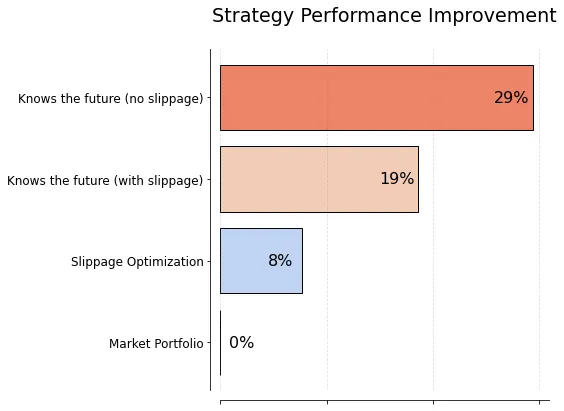
Running a more realistic simulation, whereby the allocator is rebalancing weekly but is simply trying to optimize for slippage (with no knowledge of the future), hints at significant performance improvement over the market portfolio*.
*we define the ‘market portfolio’ as a market-depth-weighted basket
This optimization problem, albeit simple, still requires decent computational resources. The universe of candidate ‘portfolio weights’ in the optimization problem is quite extensive, as shown below. Performing these calculations onchain is literally an impossible task.

Example II — Portfolio construction approach
Optimizing only for ‘slippage’ at the time of rebalancing is a rather naive approach as it assumes that the new market snapshot will not attract additional capital, and simulated offered rates will be available until the next rebalancing. Incorporating correlation information between the different markets could help produce more stable returns.
The first possibility that comes to mind is to apply a mean-variance optimization approach. Allocators can express their preferences with respect to volatility of returns and at the same time incorporate correlation information through the use of variance-covariance matrix of historical returns.
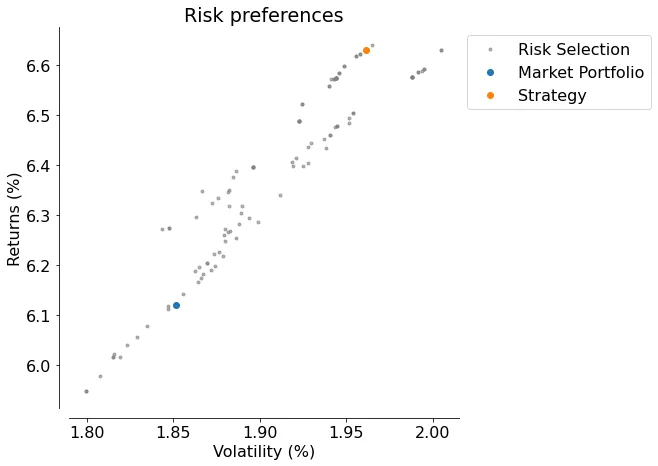
Alternatively, allocators that might not be interested in volatility of returns but rather “Jump-to-default” risk and qualitative risk assessment can implement their own version of “efficient frontier” as part of their off-chain “Alpha intelligence” logic. For more ideas on the topic, the below is an excellent reference:
Benchmarks & performance attribution for DAO treasuries — Steakhouse Financial
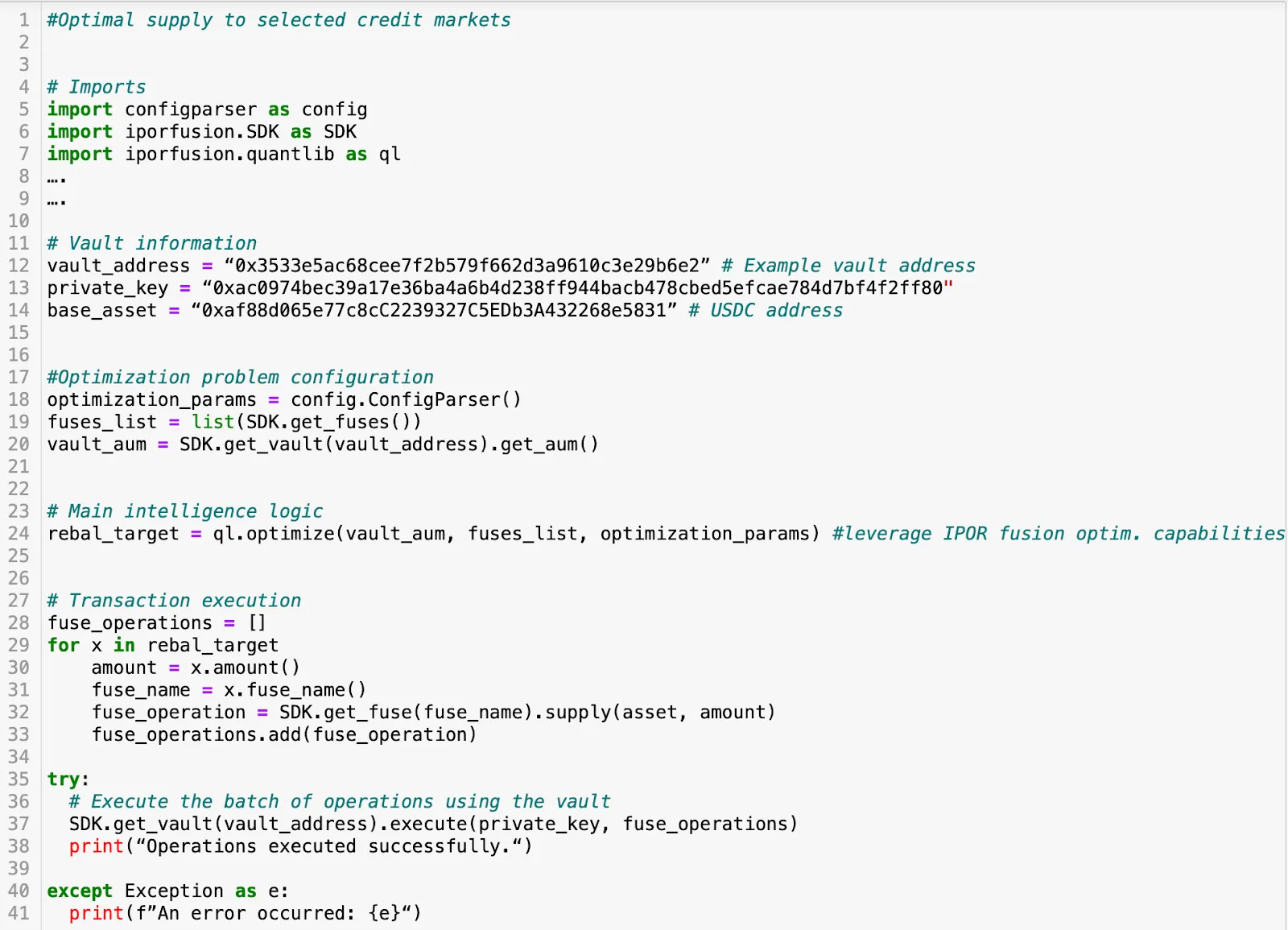
IPOR Fusion will offer core optimization functionality and capabilities that Atomists might want to reuse as part of their intelligence layer.
A sample pseudocode snippet for the optimized supply use case is listed below:
Example III — Yield enhancement through tactical trading & indicators
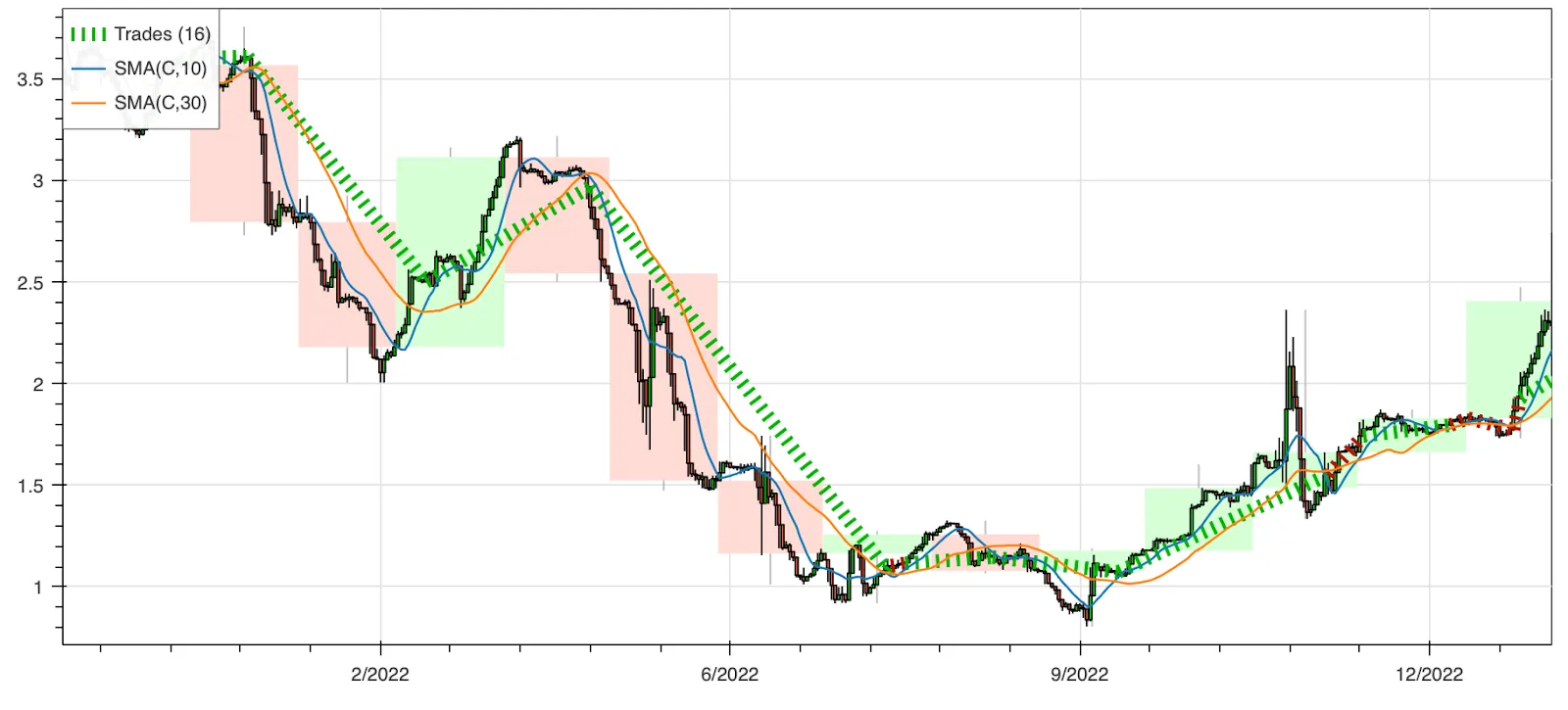
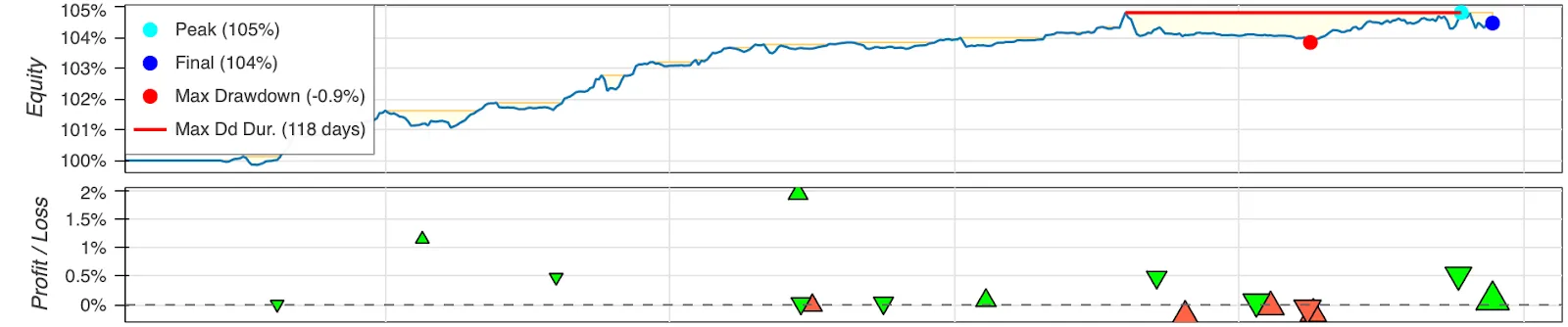
Credit market rates tend to exhibit violent spikes that typically mean-revert due to the utilization rate-based rate-setting mechanism. Short-term trends are also intermittently evident in historical time series.
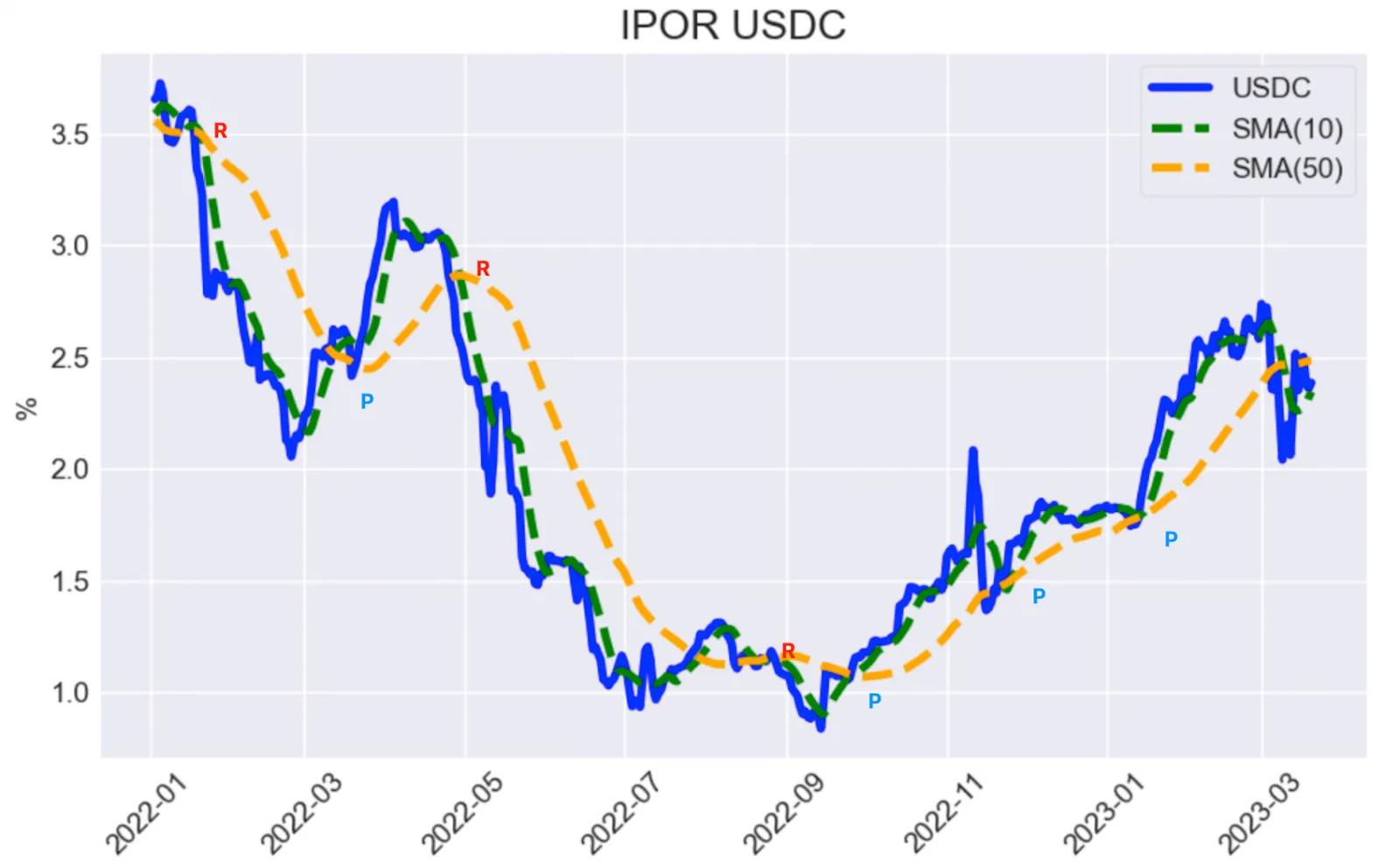
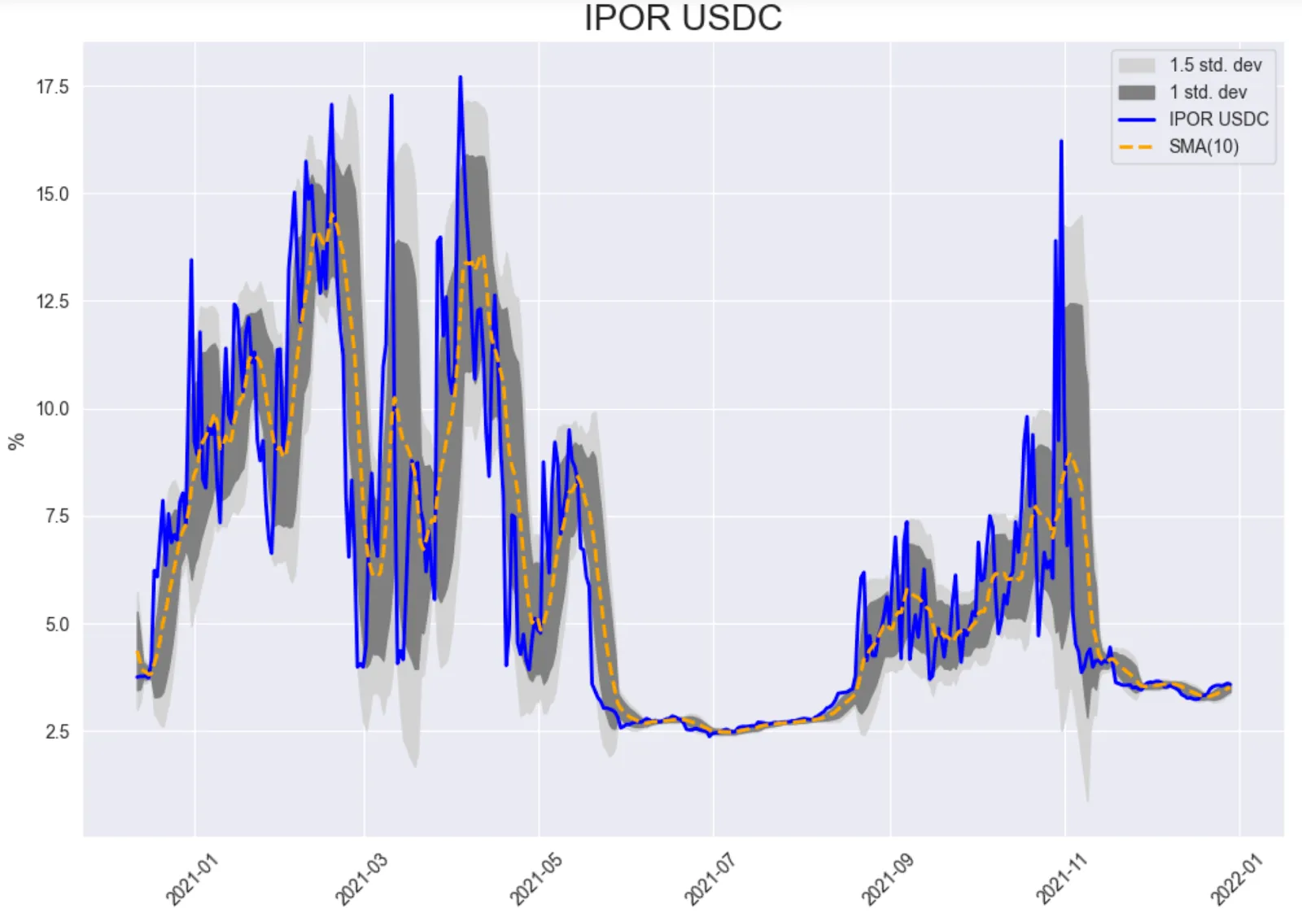
Adopting a tactical trading strategy to enhance yield — either as a standalone or complementary to a portfolio construction strategy — may also deliver improved returns. Tactical trading similarly requires real-time monitoring of market rates and is only possible by utilizing an off-chain intelligence layer.
Example IV — Rewards farming
Token rewards to liquidity providers can be a significant part of a strategy’s returns. Rewards may require special treatment in order to be translated into risk-adjusted returns. For example, a strategy with an APR of 10% in USDC and 5% USDC equivalent in COMP token is not necessarily as attractive as a strategy delivering 15% APR in USDC.
The realization of profits from accumulated rewards is essentially a strategy in itself.
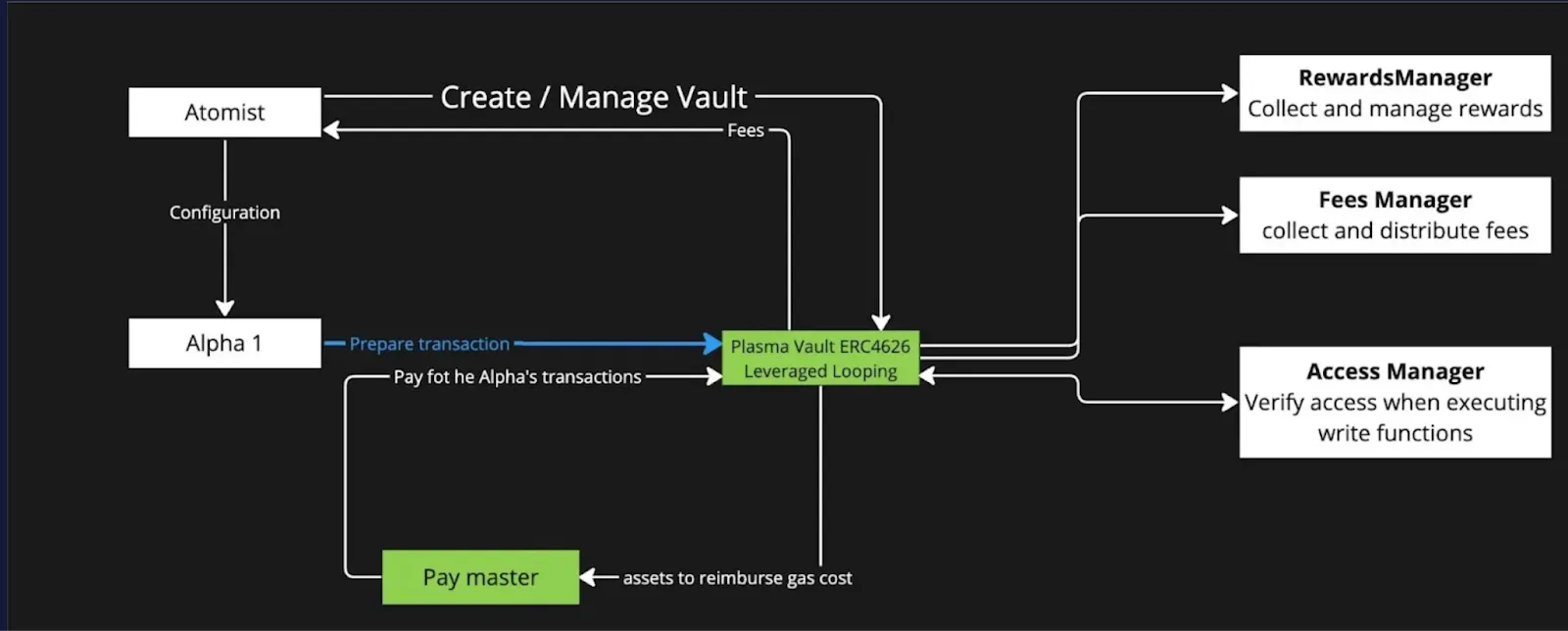
IPOR Fusion has been designed with reward management in mind; it will allow Atomists to implement their own rules for the management of accumulated rewards (e.g. based on frequency, breakeven or trading signals).
Stay tuned for more nourishing Alpha Drops
Approaching the stablecoin supply problem as a simple optimization problem is the most basic illustration of IPOR Fusion capabilities.
More alpha drops are incoming:
- Part II: Liquidity fragmentation as an arbitrage opportunity
- Use case: “Looping on steroids”
- Use case: “Decentralized Ethena”: beyond passive funding rate farming
- Application: A BTC yield generating vault
Hold on to your assets! Fusion is coming!